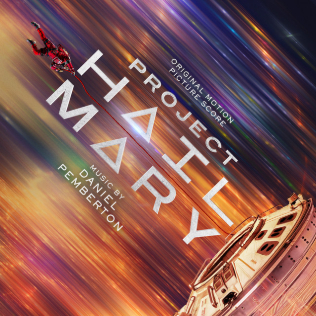
“Project Hail Mary”, a film adaptation of the novel released in 2021 by Andy Weir, has come to the big screen. The story follows Ryland Grace, a middle school science teacher who awakens alone aboard a spacecraft with no memory of how he got there or why. Eventually, a mission is uncovered: to stop a mysterious force consuming the sun and threatening life on Earth. Along the way, he forms an unlikely companionship with an alien he names Rocky.
The film relies heavily on Ryan Gosling’s performance as Ryland Grace, so being a fan of his style goes a long way in enjoying it. Carrying much of the movie alone is not a small task, but I was fully invested the entire time. Gosling does a good job of incorporating humor into those high-stakes moments and creates genuine chemistry, making the friendship with a nonhuman companion feel real. It’s their connection that gives the film much of its heart.
One of the greatest strengths of the film is how they approached the science part in science fiction. “Project Hail Mary” balances dense science topics with humor and clarity. The explanations never felt overwhelming. They are naturally worked into the plot, creating an engaging story.
The film’s use of sound and visuals makes it worth a watch. The music felt like it described what was going on, it went hand in hand with every scene. There were some familiar songs like “Sign of the Times” by Harry Styles and “Two of Us” by the Beatles that appealed to both younger and older audience members. The film’s $200 million dollar budget shows. Every scene in space is visually realistic, whether it be in the spaceship or Rocky’s human-like movements.
I’ve seen some people on social media compare it to “Interstellar”, but “Project Hail Mary” stands confidently on its own. Even though both movies explore the themes of space, survival, and isolation, this film establishes itself as a visually memorable sci-fi experience rather than living in another film’s shadow.