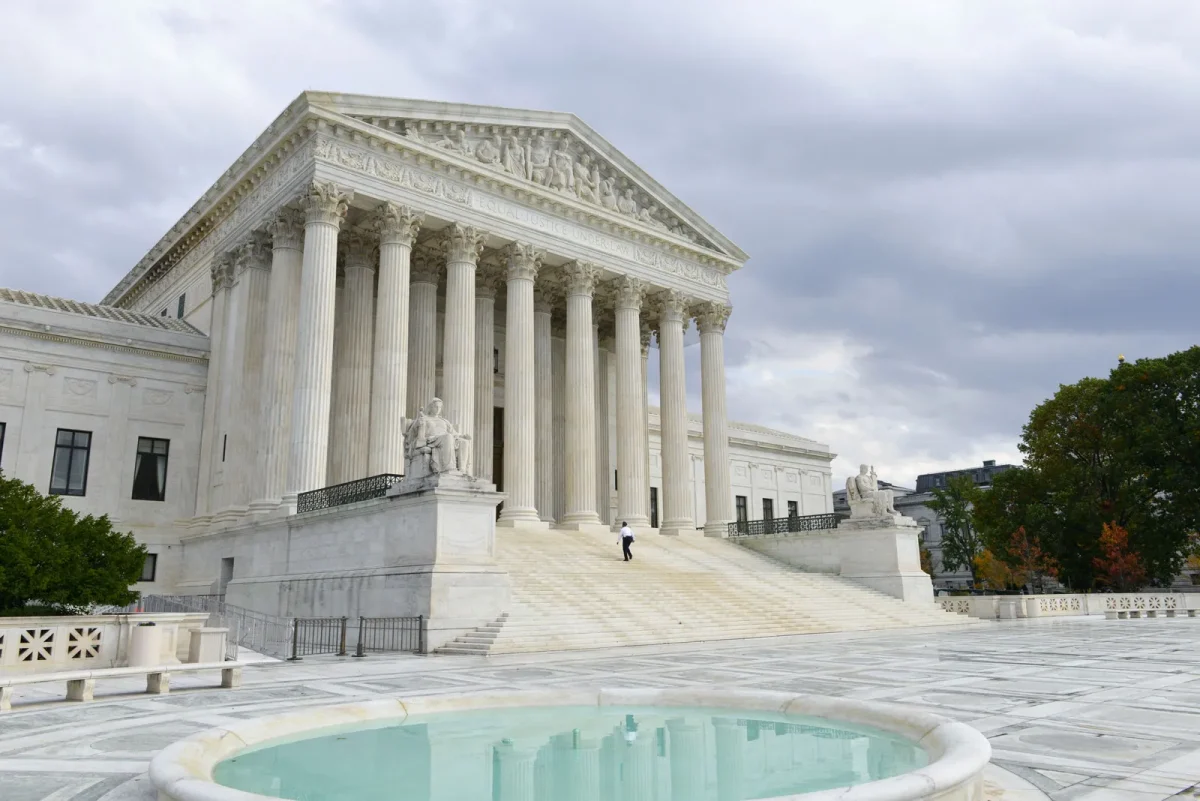
On February 20th, 2026, the United States Supreme Court struck down President Trump’s tariffs, ruling in Learning Resources Inc. v. Trump, that Trump had “overstepped his authority.” Specifically, the Court held that the President could not impose tariffs under the “emergency powers” of the International Emergency Economic Powers Act (IEEPA).
Ultimately, the president doesn’t have unilateral authority to create taxes or tariffs without congressional approval, except in limited situations permitted in certain statutes. One of those exceptions is that the President can impose tariffs under IEEPA when there is an emergency. President Trump claimed that there is an emergency due to economic threats including trade imbalances that were weakening U.S. manufacturing and that dependence on foreign supply chains posed national security risks. He also claimed there was an “unusual and extraordinary threat” due to fentanyl entering the U.S. through Mexico and other border security concerns. Based on this, Trump implemented a 10% baseline tariff on most imports, with higher tariffs up to 20-25% on certain goods from countries including China, Mexico, and Canada. The Supreme Court determined that those reasons did not constitute an emergency under IEEPA, ruling 6-3 with Chief Justice John Roberts writing the majority opinion.
The tariffs had a major economic impact on American companies and consumers. Now the question is how and if the damages can be repaid. Another concern this impacts is that the federal government’s budget was created under the assumption that these tariffs would continue. To give perspective, according to NPR, the federal government is currently collecting 30 billion dollars in tariffs each month.
Within hours of the Supreme Court’s decision striking down the IEEPA tariffs, President Trump announced a temporary, 150-day 10% global import tariff on all imports under a different law, Section 122 of the Trade Act of 1974. White House officials report that the Trump administration plans to increase to 15% in the near future.
According to the Yale Budget Lab, “If Section 122 tariffs expire as scheduled [it is expected the U.S. will see] a loss of between $600 and $800 for the average household. (If they are instead made permanent (…) the household loss figure would be $1,000 and $1,300).”
According to the White House fact sheet, “by taking this action, the United States can stem the outflow of its dollars to foreign producers and incentivize the return of domestic production. By increasing its domestic production, the United States can correct its balance-of-payments deficit, while also creating good paying jobs, and lowering costs for consumers.”