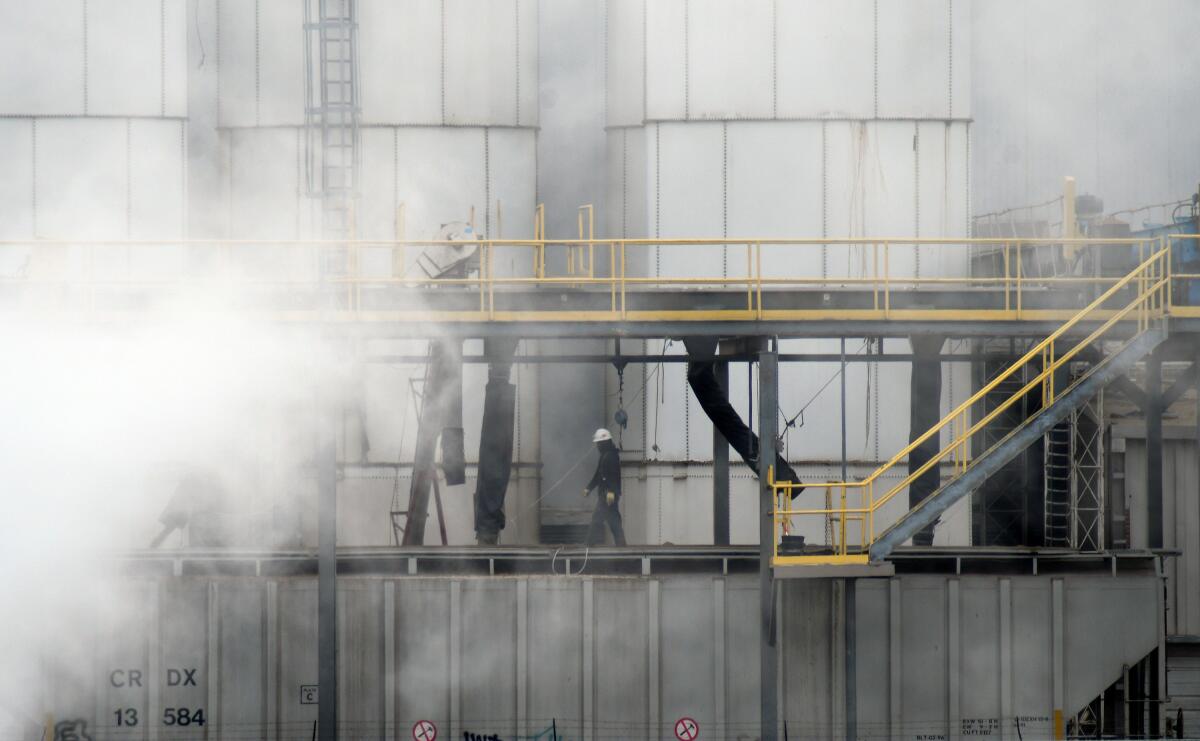
The city of Lexington, Nebraska, had its own identity in the state throughout the last 30 years. Widely regarded as a blue-collar town, the city’s economy relies heavily on the Tyson beef-processing plant built in 1990.
With nearly 3,200 workers employed at the plant, it is a major employer in the area. Lexington contains a population of just over 10,000.
However, recent news completely shook the city after Tyson announced that they would be closing the plant on Jan. 20, 2026.
Most of the city was built by families who relocated to work at the plant, leaving residents worried about future of their community. Many of those who moved to the city are immigrants.
“It is very horrible; there’s not any jobs besides this company,” said Tyson employee Abdisa Halango in an interview with the Omaha World-Herald.
Halango moved to the United States from Ethiopia, originally settling in New Jersey before moving to Lexington to work at the plant. While Halango stated that he is able to move to any other plant on his own, he feels sympathy for those families who face tougher decisions regarding their future.
The town’s population grew from 6,601 in 1990 to 10,011 in 2000, just 10 years after the plant was built. Maria Garcia moved to Lexington from California in 2017, highlighting the affordability and quiet life of the city. However, the smaller size of Lexington also caused issues within the plant.
“We don’t have a union, they couldn’t defend us because we didn’t have a union,” Garcia said in an interview with the Omaha World-Herald.
Garcia expects most workers in the plant to leave Lexington and find work in other states, noting the sense of dread that is present in the plant.
Dread isn’t the only emotion the city is feeling, however. A small clothing store, Change Clothing, is uniting the city at their weakest.
The Tyson plant originally ordered 400 green shirts in an order from Change Clothing, but the order was canceled after the announcement of the plant’s closure. Owner Nick Bowen then utilized the leftover shirts by adding “Lexington Strong” to the front, a line which quickly became popular with locals.
While many shirts were purchased to help the small business recover from the economic blow, they also became a message of solidarity for Lexington residents.
Nick’s wife, Michaela Bowen, noted that Tyson was the company’s largest customer. While they do have plans to expand nationally, Michaela felt that her greatest concern was the Lexington community, especially the immigrant population.
“Diversity in this town is what makes it so special and why we love it so much,” Bowen said in an interview with the Omaha World-Herald.
The 2020 Census estimated 60% of Lexington’s population to be of Hispanic descent, with students in the city’s school system speaking over 20 different languages.
The effects of the plant’s closure are not limited to Lexington. The shutdown puts a major dent in beef production, which can lead to higher prices of meat distributed by the company within the next year.
While there was no direct statement as to why Tyson decided to close the plant, it was likely influenced by multiple factors, including tariffs on meat imports and droughts that have impacted rancher’s ability to raise cattle recently.
Tyson is currently predicted to lose nearly 600 million dollars in beef production this year, with the company also losing a combined 720 million in the last two years.
Creighton University economist Ernie Goss noted that the plant was likely closed due to its age, as the most efficient plants rely on newer technologies to help increase production.
“It’s very difficult to renovate or make the old plant fit the new world, [the plant] just wasn’t competitive right now in today’s environment in terms of output per worker,” Goss said in an interview with the Associated Press.
The state government is responding to the losses in Lexington. The Nebraska Department of Labor is offering rapid-response layoff services in the city to help workers find new jobs quickly. Governor Jim Pillen has also noted ways that the government can help plant employees.
“The whole state is behind the community of Lexington as they face this tough transition. Our state agencies are working together to provide the support this community deserves,” Pillen said in a press release.
Pillen expressed hopes of a plan to turn the plant into a “value-added agricultural operation,” though Tyson has not responded to this comment.
The Sustainable Beef plant in North Platte and the JBS plant in Grand Island have held job fairs in the Lexington Library since the plant’s closure, but uncertainty about the city’s future remains.