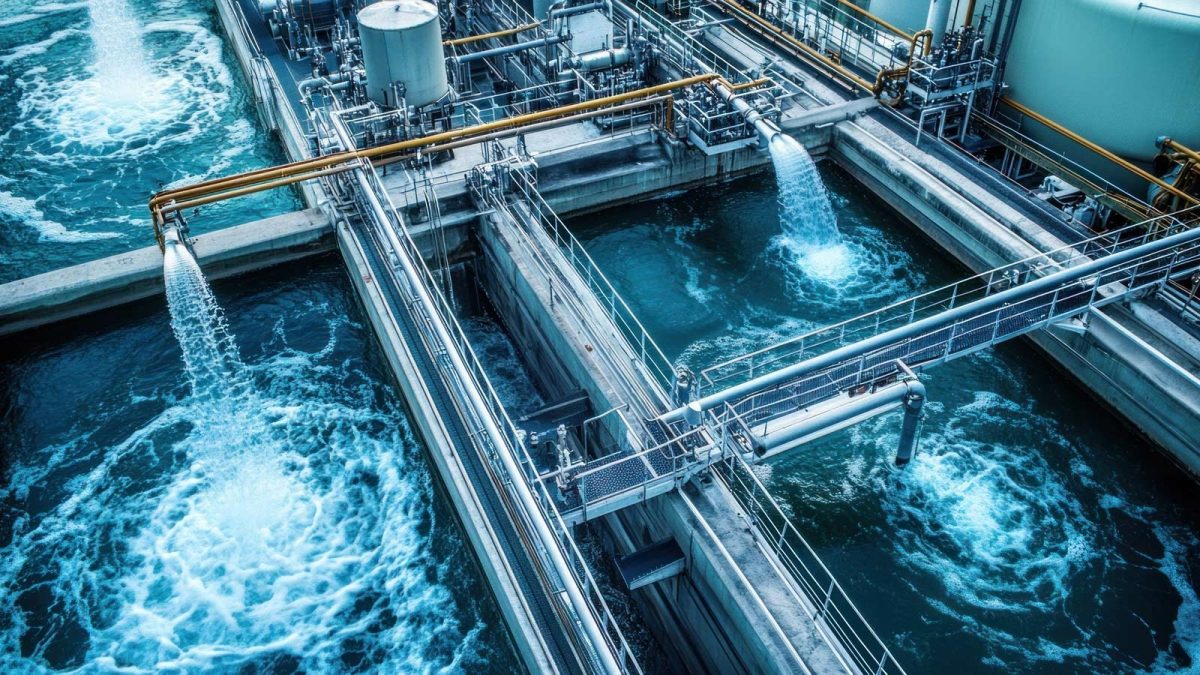
Just a single prompt to ChatGPT “drinks” about a half a liter of water, which is the size of a typical water bottle. But it’s not just the individual use of artificial intelligence, or AI, tools that consume water resources. Massive data centers are being constructed and maintained across the country in order to keep up with the AI boom and these data centers use significant water cooling, generating electricity to power servers, and manufacturing chips. By comparison, these data centers can use up to 5 million gallons of water a day, according to the Environmental and Energy Study Institute (EESI). That’s the same as a small town of roughly 10,000 to 50,000 residents, and it adds up to about 1.8 billion gallons of water consumed annually.
The United States’ water usage as a result of AI is disproportionate and impacts the rest of the world. These water-guzzling data centers are mostly concentrated in the U.S. As of 2026, the U.S. alone has approximately 5,500 data centers, making up 45% of all data centers globally. According to the BBC, by 2027 AI-related data centers could take in 2.7 trillion gallons of water annually, which, for context, is almost the same as the domestic water usage of some developed nations.
This compounds what is already a global water shortage. Wasting water on AI rather than for basic human needs is an irresponsible use of resources. In 2021, the United Nations Water Program reported that approximately 720 million people, or 10% of the global population, are living in countries with “high and critical water stress levels.”
Freshwater is a scarce resource, but nonetheless is, “at the core of sustainable development and is critical for socio-economic development, energy and food production, healthy ecosystems and for human survival itself,” according to the United Nations.
The time to act is now. At the federal level, U.S. lawmakers have introduced legislation, including the Artificial Intelligence Environmental Impact Act of 2024, to mandate standards for developing and assessing the impacts of AI operations. On the international scale, the European Nations, or EU, is working on an AI Act to require high-risk AI systems to report their energy consumption and resource use. In addition to supporting these policy changes, even the average person can make a difference by being responsible with AI their use and ultimately spreading awareness on this issue.