Hundreds of Westside students walked out of class at 2:30 p.m. on Friday, Feb. 6, in a student-led protest addressing rising concerns about the U.S. Immigration Customs Enforcement (ICE) in the Omaha community.
Across the country, young people are using walkouts or other forms of protest more frequently to express their political views. Friday’s protest was one of the most visible demonstrations of student activism at Westside High School. The event revealed how students are choosing to publicly engage with a national crisis–their decision to participate was shaped by an increasing sense of urgency and a belief that silence was no longer an option.
“America is a nation of immigrants,” senior Elizabeth Bender said. “Everyone living in America has constitutional rights, due process. I love this country. I don’t want to see its Constitution violated.”
The walkout was organized by junior Leigha Cherry Lewis, who saw similar demonstrations at other schools and decided to take initiative at Westside.
“I got really tired of waiting,” Lewis said. “I was waiting for somebody else to say, ‘I want to have a walkout,’ but nobody did.”
Lewis started by creating a petition and asking who would help organize. Sophomore Yussuf Mohammed was among the first to respond and demonstrate interest.
“We started small,” Lewis said. “We took baby steps.”
According to the organizers, the protest was prompted by viral videos of aggressive acts committed by ICE online. Both Lewis and Mohammed felt it necessary to act upon seeing that footage.
“I watched the videos. I listened to people crying,” Lewis said. “I just wanted to do something about it.”
Mohammed said he joined the effort after seeing similar content online.
“It was an act to say what we believe in,” Mohammed said. “To show that we care.”
As word of the protest spread via social media and word-of-mouth, participation grew. For many participants, the issue was a personal one.
Freshman Lucy Feltis said her decision to walkout was rooted in her personal values.
“My morals reflect this,” Feltis said. “People should know the extent we’re willing to take this.”
Junior Isabelle Ohlson has been advocating for the rights of immigrants for many weeks. She described a moment earlier in the day that reinforced her decision to walk out.
“I walked past a custodian who read my sign, and he said he brought his papers just in case,” Ohlson said. “It’s heartbreaking.”
Ohlson hopes that people realize how much of an impact student activism can have.
“We’re young, but small changes mean a lot,” Ohlson said. “The younger generations are going to be in charge soon.”
Following a situation in Fremont, where a student participating in a similar demonstration was hit by a car driven by an opponent of the cause, some students referenced safety concerns. Most, however, said they felt prepared. Sophomore Jillian Snyder was among this group of participants.
“I feel safe due to the amount of people around me and the trust that I put in our school,” Snyder said.
One student, who asked to remain anonymous, said they brought medical supplies in case of an emergency.
“I was worried about someone getting hit by a car or even tear gas,” the student said.
Lewis acknowledged that not all students agreed with or felt safe enough to participate in the walkout.
“If you didn’t walk out because you were scared or didn’t have permission, I don’t blame you,” Lewis said. “But keep the comments respectful.”
Some protesters and organizers experienced backlash from peers prior to and following the walkout. Mohammed described a moment during the school day when a racial slur was directed at him.
“I think that was immature,” Mohammed said. “That person needs to educate themselves.”
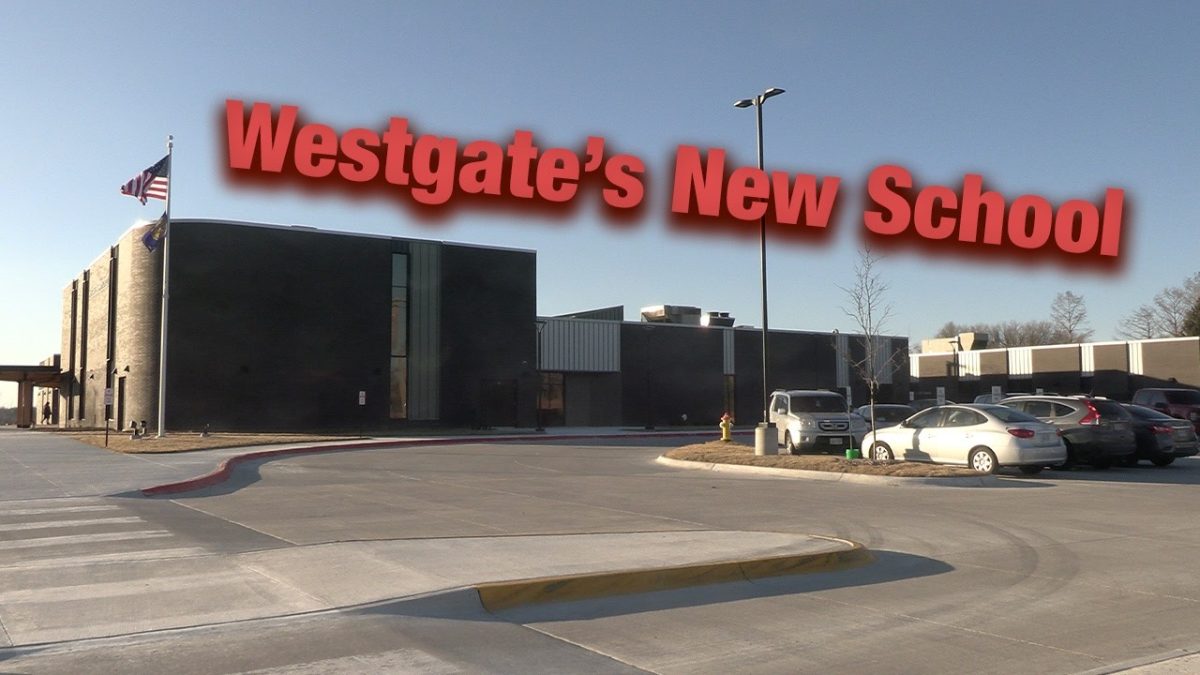
The Westside administration was aware of the protest well in advance and planned accordingly. Protesters were to remain on the sidewalk of Pacific Street and not go past the yellow tape set out to block the area.
Lewis explained that the turnout represented far more than a single afternoon protest.
“Friday was a big example of what happens when you use your voice,” Lewis said. “People showed up.”