For the first time in over 50 years, astronauts headed to the moon. NASA launched its Artemis II mission on April 1, sending a four-person crew on a flyby around the moon and back to earth over the span of 10 days.
The primary goal of Artemis II was to test the Orion spacecraft with astronauts on board and to ensure all systems work properly in deep space. The crew checked critical systems such as life-support, spacecraft operations and communication. They also observed the moon and ran experiments on how space affects the human body, all of which will help prepare scientists and astronauts for future missions.
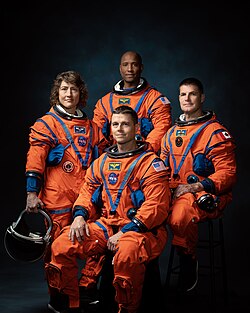
The crew consisted of Commander Reid Wiseman, Pilot Victor Glover, Mission Specialist Christina Koch, and Canadian Mission Specialist Jeremy Hansen. For most of the crew, this was their second spaceflight, which brought experience from several previous missions and spacewalks.
The crew flew in NASA’s Orion spacecraft, their most powerful system for deep-space exploration. The development of the spacecraft started in 2006 and continued on to 2022. While not the most expensive project in NASA history, the system ended up costing $20.4 billion. Unlike previous capsules, Orion is designed to be partially reusable, in the hope of maximizing cost efficiency and maintaining sustainability.
The Artemis II crew successfully launched from Kennedy Space Center, and carried out a series of mission tasks, including the lunar flyby which took place on April 6. On the flyby, the crew took photos and observed the moon’s far side from roughly 4,000 miles away. They then began their journey back home and landed in the Pacific Ocean on April 10.
Artemis II is a key step toward returning humans to the moon and eventually sending astronauts to Mars. NASA’s next mission, Artemis III, aims to land astronauts on the moon’s surface for the first time in decades, with plans to build a long-term human presence there in the future. These missions could lay the groundwork for space colonization and deeper exploration of our solar system.