Before the bell rings, as students walk into Westside High School, there are many not socializing, interacting or communicating with each other because they are distracted by a phone. Heads are down, hoodies up and eyes are glued to the device, as the loud sound of silence fills the halls. There is little communication or verbal interaction. Critics say many students don’t even have a social battery anymore because they are so invested in social media and tied into their phone.
The scene that takes place at Westside before school can be found all across America and this year the Nebraska state legislature took notice. What happens with their devices before school is up to students to decide. But when school starts, cell phone use not only can be restricted inside the school buildings in Nebraska, but it’s a requirement.
According to the new Nebraska law, cell phones must be restricted in schools during class time (Nebraska Legislative Bill 140). The law states that “schools shall prohibit the use of an electronic communication device by students while on school property or attending a school instructional function”.
This law has drawn more attention to the rates of phone usage in schools, which have steadily gone up. It’s easy for students to glance at a notification then get lost, missing the lesson the teacher is teaching. The hope of the legislation is that this will be a way to keep students focused and on task, or to stop students from being tempted to use them.
Most people, including students, can relate to the idea of getting lost in their phone unintentionally.
“Last week my mom asked me to pick up the toys my little brother dumped out all over the floor in the living room. So I grabbed my phone to play music while I cleaned and that’s when I heard my phone ding,” junior Selena Sabino said. “I checked my phone to look at the notification and next thing you know I’m sitting on the couch and I’m still on my phone almost an hour later because I got carried away and so deep in my phone and I hadn’t picked up a single toy.’’
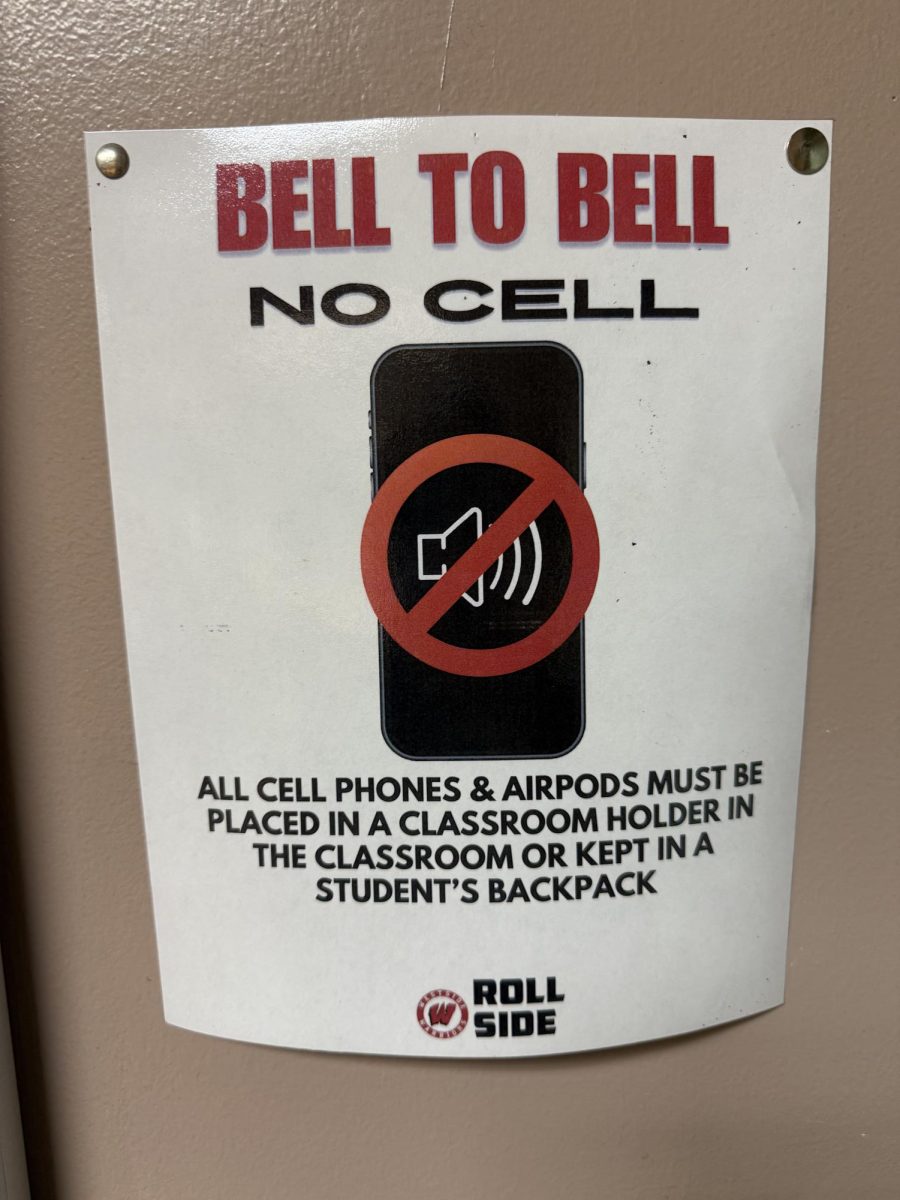
Before this new law many schools already had students limit their time on their devices, including not using them at all during class. In 2024 Westside adopted a rule called “Bell to Bell No Cell.” This policy encourages students to pay more attention to their work and be involved in activities during class by having their full attention on their assignments. Keeping devices out of reach allows students to be more dedicated in their work and focus more on the lesson.
In Nebraska, the Department of Education strongly agrees that devices have been a distraction, so they have applied a similar rule to the state in the form of a state law. This is to keep students from being tempted to get on their phone when they could be working and using their time more wisely. The legislature even put the option of school consequences into the law to give schools the power to enforce. Students know that additional enforcement at Westside is possible.
“Bell to bell no cell is important to make sure everyone is on task and gets their work done but sometimes a lot of students are still on their phones so I wonder are they going to take a step further and have students put their phones in pouches for the whole school day, in the future, if this issue doesn’t get fixed,” junior Khloee Bullok said.
Students hope that if they fix the issue of excessive phone usage, then maybe putting phones in pouches all day won’t be considered.
“Being at school without a phone can be boring when it’s not class time and I know there’s some schools who make students lock their phone up all day until the bell rings and I wouldn’t want to lock my phone up in a pouch all day, in case of an emergency,” junior Kilan Davis said.
There are many things that keep teenagers distracted but cell phone use and social media is one of most prominent. The fact that the legislature has enacted a law that impacts all students across the state is a large response to fight this perceived problem.
Studies have also shown that phone use and social media have negatively affected people’s identity, social interaction and mental health, and that staring at a screen all day can affect your vision and your posture. It could be that students will gain more than better attention through these efforts.
Time will tell what benefits might be seen from the new law.