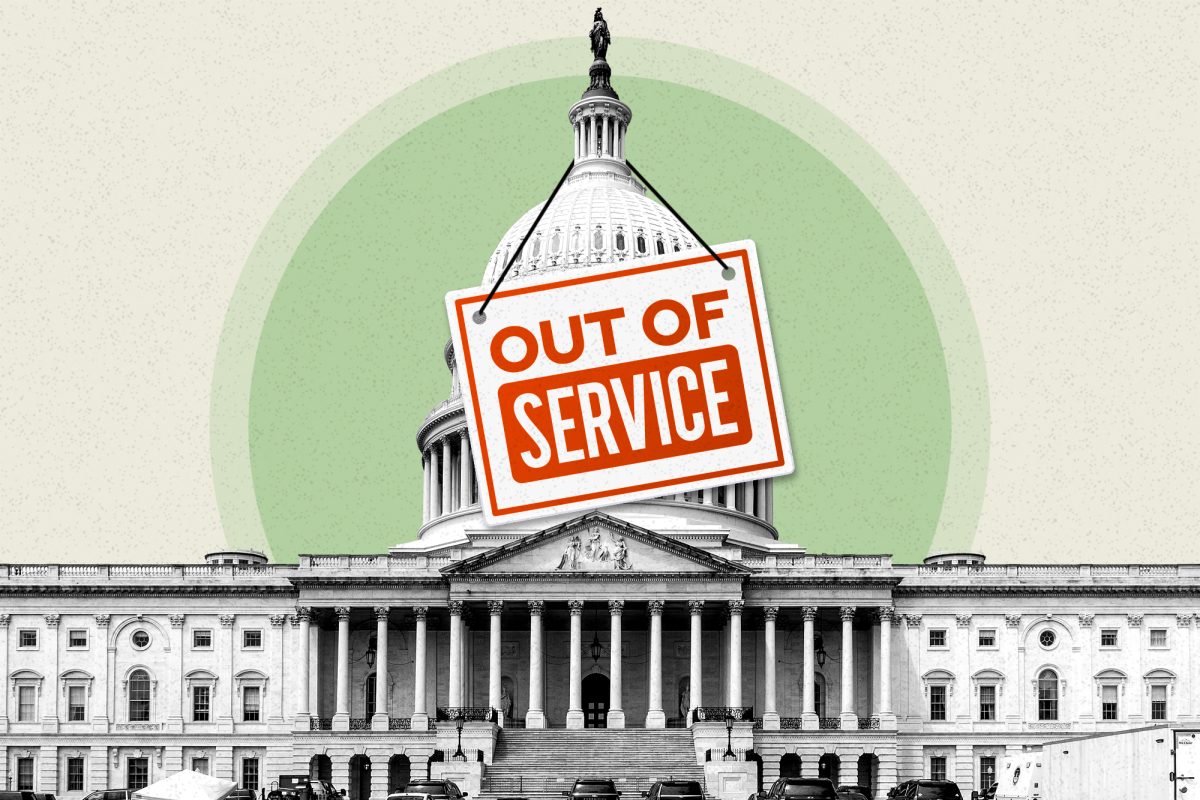
After a record 43 days, the United States federal government reopened on Nov. 12, 2025. The shutdown began on Oct. 1, after the funding bill for the new fiscal year failed to pass in Congress.
The primary delay in passing the bill was due to Democratic senators opposing additional cuts to Medicare and Medicaid, which had already been significantly reduced by the Big Beautiful Bill passed in July.
Significant issues occurred during the shutdown, including hundreds of thousands of federal workers having their pay paused, flights across the nation being canceled due to staffing shortages and Supplement Nutrition Assistance Program (SNAP) benefits not being distributed in November, leaving low-income households without food.
After 40 days of negotiation, eight Democratic Senators voted to pass the funding bill without the continuation of Medicare and Medicaid funding, ending the shutdown.
While the resumption of SNAP benefits and federal workers’ provides immediate relief, questions remain about whether the funding bill is ultimately beneficial to Americans. Based on the bill’s goals, critics argue the answer is no. While there are multiple reasons for this view, it doesn’t rest solely on one party, but rather reflects broader bipartisan failures.
Let’s start out with the Republicans. First off, cutting back on accessible healthcare is in no way good for Americans, especially the lower class. The program can easily be funded by taxpayers, and benefits millions across the country. The taxes wouldn’t even impact lower classes much either, a good majority can be funded by the billions that the top 1% are sitting on. Republicans having a populist reputation is strange, considering how blatant they are with changes that weaken the middle class.
There’s even greater concern with the Democrats at the moment, due to the fact that they can’t seem to stand their ground in a position as high as congress. The result of the bill being passed without guaranteeing to not cut back on healthcare was due to the eight Democratic Senators breaking down and effectively giving Republicans everything they wanted.
While you could argue that those eight Senators were right to agree to the bill because of those affected by the shutdown, along with the agreement to revisit healthcare talks, there’s some very simple points shutting those arguments down.
Looking at the argument of ending the shutdown to restore SNAP benefits and other impacts of the shutdown, it’s a fine point, but it was also caused by Republicans using it as a wager against Democrats. President Trump directly filed an order to the Supreme Court requesting that SNAP benefits should not be funded by emergency funds during the shutdown. By siding with the Republicans here, it’s playing straight into their leverage.
The second argument regarding revisiting healthcare talks is even easier to work around. Who will guarantee that these talks will even lead anywhere? Republicans control both the House and Senate, they can very easily shut down any bill that Democrats try to introduce that extends Medicare and Medicaid funds. The eight Senators threw millions of Americans under the bus for a pinkie promise at the most.
While the first House debate regarding healthcare is set to be in December, the Senate will not hold one, leaving both parties in a tassel regarding the future of millions of Americans.