Video by Zoe Miller, Wired Staff Writer
Video edited by Aliyah White, WTV Executive Producer
By Malia Battafarano and Reese Pike
Stereotypes Applied to Mass Shootings
Claire Benson, Wired Staff Writer
In the history of the United States, there have been more than 400 mass shootings, and 70 terrorist attacks since September 11th, 2001. With every shooter, there comes a unique motive as well as a targeted crowd. More recent mass shootings and terrorist attacks could be described as hate crimes; since they have targeted people of certain religions, races and sexualities.
Unfortunately, when discussing the shooter in particular, there are common stereotypes that appear more than they should. When the words “mass shooting” or “terrorist attack” are spoken, thoughts drift to the shooter and who they are as a person.
The United States has had its fair share in mass shootings, as well as terrorist attacks. Due to stereotyping and racism found throughout our country, many assume the shooter to be a person of color, most commonly of Middle Eastern descent. Since several of the attacks in the U.S. have been committed by radical Islamic terrorists, some have the idea that many Muslim people are terrorists. We can see this stereotype found in our current president, Donald Trump. For example, his travel ban on mostly Middle Eastern countries, where a large majority of Muslim individuals reside. By doing this, Trump is discriminating against people from the Middle East. It is possible to infer that he believes anyone from that specific region traveling into the U.S. has a sadistic plan involving terrorism.
The FBI reports that between 1980 and 2005, 94 percent of terrorist attacks that occurred were performed by individuals who were not Muslim. An in-depth investigation surrounding mass shootings performed by the publication Mother Jones revealed that 54 percent of mass shootings from 1982 to present day were executed by white men. In fact, a suspect involved in a terrorist act in the U.S. is nine times more likely to be non-Muslim rather than Muslim. These same statistics can be applied to Europe as well. Less than 2 percent of the terrorist attacks that occurred in Europe throughout the past five years were performed by Muslims. This once again proves that the stereotype of “all terrorists are Muslim” or “all Muslims are terrorists” is an inappropriate stereotype.
When thinking of someone who has carried out a mass shooting or a terrorist attack, many if not all assume the perpetrator to be male. This is an example of the public stereotyping the suspect, while some do not even realize it. Newsweek reports that 63 percent of men are more likely to commit violent crimes. This leads into mass shootings, where 98 percent are performed by men. This stereotype prove beyond doubt to be true, due to the numerous statistics and evidence that prove it to be so.
With the topic of mass shootings, comes the topic of gun control in the United States. And with gun control, comes the topic of mental health and whether or not mentally ill individuals should have access to purchasing a gun. Yet another stereotype revolving around perpetrators in mass shootings is that they a mental illness. Many use mental illness as an excuse for the individuals performing these vicious crimes.
The Atlantic found that serious violence as an adult is more caused by childhood abuse and or trauma rather than a mental illness. The National Center for Health Statistics reports that less than 5 percent of killings between 2001 and 2010 in the United States involving guns were committed by someone obtaining a mental illness. Criminologist James Alan Fox from Northeastern University reports that only around 23 percent of mass killers happen to be mentally ill.
While individuals who perform mass killings, shootings and or terrorist attacks may happen to be either Muslim, a person of color, a male, or have a mental illness; that does not mean anyone who fits one of those characteristics is a dangerous criminal. It also does not mean every criminal who carries out a violent crime fits one of those characteristics. Stereotypes have always been apart of society, and it will likely stay that way. They help aid in discrimination that has been and is present in our country. It is so important that we do not stereotype others, because every individual and their situation will be different from the rest.
Von Maur, A Retrospective
Julia Steiner, Lance Design Editor
I remember the Von Maur shooting like it was yesterday. Even though I was six years old, I recall every small detail about Dec. 5, 2007.
I was watching the 5 p.m. news broadcast in my family room with my mom. I saw the flashing lights of the emergency vehicles and first responders darting in and out of the store’s doors. Some people were being escorted out of the store with their hands up while others were in the parking lot covered in blankets. Something was obviously wrong, but I didn’t realize the severity of the situation until we got the phone call.
We were focusing on the television when my mom received a phone call. She answered her phone and after a couple moments of silence, her face paled and she walked upstairs to her bedroom.
I exchanged glances with my dad and after giving her a few minutes, we decided to head up and check on her. We opened the door to her sitting on her bed in complete silence. She looked at me and my dad before putting the situation in the simplest terms possible: our cousin, Janet Jorgensen, was one of the eight victims killed in the Von Maur shooting.
Von Maur itself has always been a part of my life. My mom was, and still is, a loyal customer and she always took me with her to go shopping. Many employees knew my mom by name, what she liked to buy and would call her to see how things were going. After a while, I became a regular too. We’d always go in and stop by the gift department just to see my cousin, Janet. Along with her, other employees would stop and make conversation with my mom, turning our intended fifteen minute quick stop into an hour long excursion.
Since the shooting happened when I was so young, I didn’t get the full story of what happened, but through the years, I’ve learned more about the events that took place.
According to multiple sources, the shooter was a nineteen-year-old man who had several mental disorders. He had been in and out of psychiatric treatment and one day decided that enough was enough.
The shooter entered the mall early that Wednesday morning with the intent of harming others and himself. With his Wassenaar Arrangement semi-automatic rifle, he took the elevator up to the third floor of the store and opened fire.
Janet had the chance to run, but instead she helped other people out of the mall, sacrificing her life for them. While doing so, she was shot in her leg and the bullet struck her femoral artery. She then dragged herself into a back room where other employees were hiding. The people tried their best to stop the bleeding, but by then, Janet had lost too much blood to survive.
A hotel across the street was designated as a hub for families awaiting information regarding their loved ones. My mom stayed home, but my grandparents and my aunts and uncle went to be with Janet’s immediate family. The Omaha Police Department released names and identified the bodies of the victims at the hotel and, after hearing Janet was a victim, our lives changed drastically.
The aftermath of the shooting was extremely emotional, but the people of Omaha came together and supported one another. Creighton University’s St. John’s Church hosted a prayer vigil the night of the shooting, along with many other churches. St. Leo’s Church held a mass and people were lining up an hour and a half before the service began. Then mayor Mike Fahey hosted a press conference with Von Maur’s president, James von Maur, expressing condolences and showing support to the community.
Von Maur was closed on Dec. 6, 2007, but on Dec. 7, 2007, the community came together in remembrance of the victims. My aunt Lynn, my mom and I went to the mall where hundreds of people filled the previously barren parking lot. Memorials composed of stuffed animals, wreaths and flowers were being put up on the front steps of the store. Paper snowflakes covered the front doors and the gates closing off Von Maur from the rest of the mall. I distinctly remember cutting out my lime green snowflake and writing a message to Janet using a purple crayon. Complete strangers were comforting one another and praying for each other and at such a young age, the sense of unity that was being displayed that day was absolutely beautiful and empowering.
The city of Omaha stuck together for months afterward. Janet’s funeral had over one thousand people in attendance. My mom had to stand in the back of the church at her own cousin’s funeral because so many people showed up. Family, friends, customers, employees and strangers were all there, but unfortunately so were members from Westboro Baptist Church. They came from Missouri to protest because my cousin was a high-profile victim of a mass shooting and did their best to try and antagonize my family. The police came and did their best to keep them from interrupting the funeral, but their signs and crude comments were unavoidable. This unfortunately happened at all of the funerals of the victims.
This entire experience has shaped my perspective regarding many topics. As a child, you’re exposed to the good in the world and shielded from the bad. This was my first taste of the evil side of human nature. The idea of someone killing another person is outlandish as a child and is hard to imagine. You only think people die from old age or illness, not from homicide.
A burning question of mine is why the shooter felt the need to do this. I’ve heard countless broadcasts, read several articles and even the suicide note he wrote before committing this atrocity, but those answers aren’t sufficient enough. It’s been noted that the shooter had attention deficit disorder, oppositional defiant disorder, an unspecified mood disorder, relationship issues with his parents and other extreme psychiatric issues, but what drove him to do what he did? Millions of Americans experience at least one of those things listed above, but the majority haven’t killed anyone because of it. To this day, I still don’t understand why he went through with his actions, but it cost my cousin her life and I haven’t been able to bring myself to say his name since.
Janet was a wonderful person. She worked in the gifts department and was one of the first employees at Von Maur. Throughout her employment, she became one of the top sellers in the company and she was about a month away from retirement. She had also just reached her 50th wedding anniversary with her husband Ron and they were in the process of planning a party to celebrate the milestone.
Each year, when December rolls around, the media brings back old broadcasts from the shooting. The same people are interviewed and the shooter’s horrible legacy still lives on. The anniversary of this tragedy is inevitable, but even after ten years, we all just try to do our best and be optimistic.
Von Maur Shooting: Personally Affected
Alex Vandenberg, Lance Feature Editor
I remember the Von Maur shooting like it was yesterday. Even though I was six years old, I recall every small detail about Dec. 5, 2007.
I was watching the 5 p.m. news broadcast in my family room with my mom. I saw the flashing lights of the emergency vehicles and first responders darting in and out of the store’s doors. Some people were being escorted out of the store with their hands up while others were in the parking lot covered in blankets. Something was obviously wrong, but I didn’t realize the severity of the situation until we got the phone call.
We were focusing on the television when my mom received a phone call. She answered her phone and after a couple moments of silence, her face paled and she walked upstairs to her bedroom.
I exchanged glances with my dad and after giving her a few minutes, we decided to head up and check on her. We opened the door to her sitting on her bed in complete silence. She looked at me and my dad before putting the situation in the simplest terms possible: our cousin, Janet Jorgensen, was one of the eight victims killed in the Von Maur shooting.
Von Maur itself has always been a part of my life. My mom was, and still is, a loyal customer and she always took me with her to go shopping. Many employees knew my mom by name, what she liked to buy and would call her to see how things were going. After a while, I became a regular too. We’d always go in and stop by the gift department just to see my cousin, Janet. Along with her, other employees would stop and make conversation with my mom, turning our intended fifteen minute quick stop into an hour long excursion.
Since the shooting happened when I was so young, I didn’t get the full story of what happened, but through the years, I’ve learned more about the events that took place.
According to multiple sources, the shooter was a nineteen-year-old man who had several mental disorders. He had been in and out of psychiatric treatment and one day decided that enough was enough.
The shooter entered the mall early that Wednesday morning with the intent of harming others and himself. With his Wassenaar Arrangement semi-automatic rifle, he took the elevator up to the third floor of the store and opened fire.
Janet had the chance to run, but instead she helped other people out of the mall, sacrificing her life for them. While doing so, she was shot in her leg and the bullet struck her femoral artery. She then dragged herself into a back room where other employees were hiding. The people tried their best to stop the bleeding, but by then, Janet had lost too much blood to survive.
A hotel across the street was designated as a hub for families awaiting information regarding their loved ones. My mom stayed home, but my grandparents and my aunts and uncle went to be with Janet’s immediate family. The Omaha Police Department released names and identified the bodies of the victims at the hotel and, after hearing Janet was a victim, our lives changed drastically.
The aftermath of the shooting was extremely emotional, but the people of Omaha came together and supported one another. Creighton University’s St. John’s Church hosted a prayer vigil the night of the shooting, along with many other churches. St. Leo’s Church held a mass and people were lining up an hour and a half before the service began. Then mayor Mike Fahey hosted a press conference with Von Maur’s president, James von Maur, expressing condolences and showing support to the community.

A memorial was built on the steps of Von Maur honoring the victims of the Von Maur shooting on Dec. 7 2007. Photo by Sherri Vandenberg
Von Maur was closed on Dec. 6, 2007, but on Dec. 7, 2007, the community came together in remembrance of the victims. My aunt Lynn, my mom and I went to the mall where hundreds of people filled the previously barren parking lot. Memorials composed of stuffed animals, wreaths and flowers were being put up on the front steps of the store. Paper snowflakes covered the front doors and the gates closing off Von Maur from the rest of the mall. I distinctly remember cutting out my lime green snowflake and writing a message to Janet using a purple crayon. Complete strangers were comforting one another and praying for each other and at such a young age, the sense of unity that was being displayed that day was absolutely beautiful and empowering.
The city of Omaha stuck together for months afterward. Janet’s funeral had over one thousand people in attendance. My mom had to stand in the back of the church at her own cousin’s funeral because so many people showed up. Family, friends, customers, employees and strangers were all there, but unfortunately so were members from Westboro Baptist Church. They came from Missouri to protest because my cousin was a high-profile victim of a mass shooting and did their best to try and antagonize my family. The police came and did their best to keep them from interrupting the funeral, but their signs and crude comments were unavoidable. This unfortunately happened at all of the funerals of the victims.
This entire experience has shaped my perspective regarding many topics. As a child, you’re exposed to the good in the world and shielded from the bad. This was my first taste of the evil side of human nature. The idea of someone killing another person is outlandish as a child and is hard to imagine. You only think people die from old age or illness, not from homicide.
A burning question of mine is why the shooter felt the need to do this. I’ve heard countless broadcasts, read several articles and even the suicide note he wrote before committing this atrocity, but those answers aren’t sufficient enough. It’s been noted that the shooter had attention deficit disorder, oppositional defiant disorder, an unspecified mood disorder, relationship issues with his parents and other extreme psychiatric issues, but what drove him to do what he did? Millions of Americans experience at least one of those things listed above, but the majority haven’t killed anyone because of it. To this day, I still don’t understand why he went through with his actions, but it cost my cousin her life and I haven’t been able to bring myself to say his name since.
Janet was a wonderful person. She worked in the gifts department and was one of the first employees at Von Maur. Throughout her employment, she became one of the top sellers in the company and she was about a month away from retirement. She had also just reached her 50th wedding anniversary with her husband Ron and they were in the process of planning a party to celebrate the milestone.
Each year, when December rolls around, the media brings back old broadcasts from the shooting. The same people are interviewed and the shooter’s horrible legacy still lives on. The anniversary of this tragedy is inevitable, but even after ten years, we all just try to do our best and be optimistic.
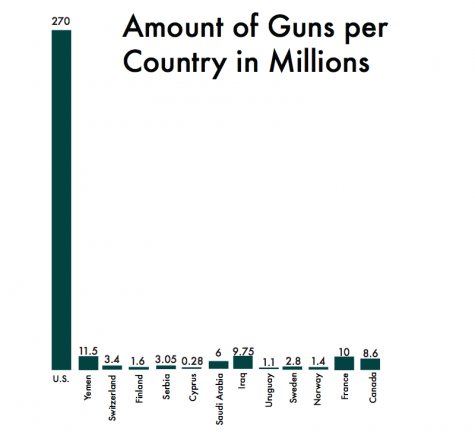
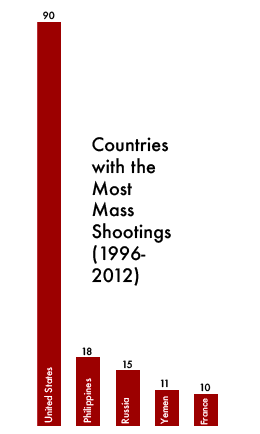
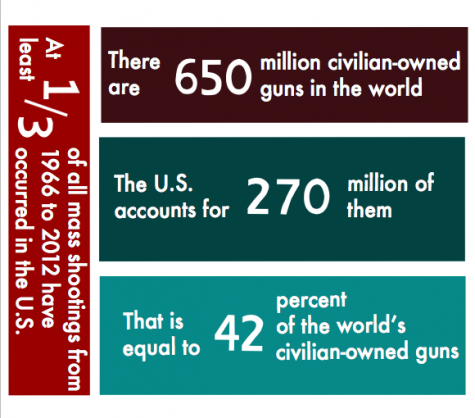
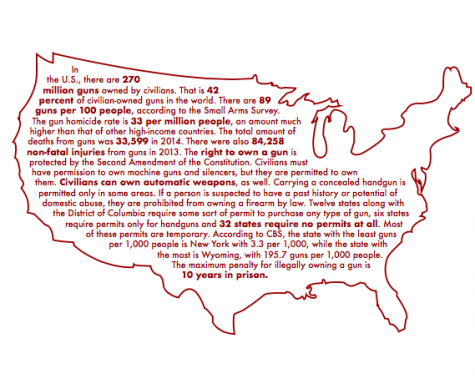
Around the World
Statistics compiled and graphics by Reese Pike
Sources: Small Arms Survey, Dr. Adam Lankford (University of Alabama), and GunPolicy.org (an organization run by the University of Sydney)


A Rise in Mass Shootings
Lili Fogland and Virginia Jansen, Lance Photo Editor and Lance Feature Editor
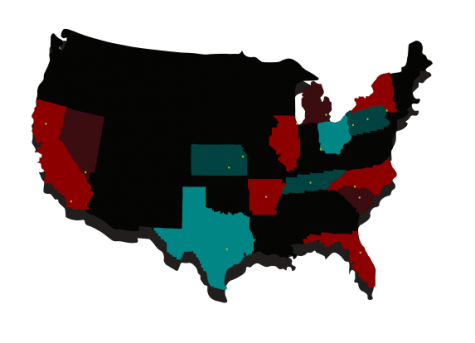
The Federal Bureau of Investigation (FBI) released a report on Sept. 13, 2013, calculating the increase of mass shootings. They define mass shootings as an incident in which a gunman kills four or more people (including the perpetrator). From 2000 to 2006, there was an average of 6.4 shootings annually, which increased to 16.4 shootings annually from 2007 to 2013. Global Intolerance and AP Government teacher Jonathan Preister provided insight on the issue.
“I think that [the increase of annual shootings] is very scary, you know, and I think that if we stay on this current trajectory it’s only just a matter of time that we have an incident somewhere here that impacts a lot of students and families here in Nebraska,” Preister said.
As of Dec. 11, 2017, students at Westside have lived through 406 mass shootings based on the national media’s source the Mass Shooting Tracker. The tracker’s statistics are used by CNN, MSNBC, The New York Times and others. Their definition of a mass shooting is defined as an incident in which a gunman shoots or kills four or more people (including the perpetrator).
National news channels have recently only covered mass shootings which have significantly more killings and injuries than others that happen more frequently. For example, a shooting in Sutherland Springs, Texas, and the mass shooting in Las Vegas left, in total, 86 dead and 641 injured. 27 people died in Texas, leaving 20 injured. Fifty-nine people died in Las Vegas, injuring 441. On the same days those shootings occurred, however, other mass shootings took place in Michigan and Kentucky and did not receive national attention.
Senior Isabelle Liske said she was surprised when she heard about how many mass shootings there were this year that she hasn’t heard about and said she believes people need to do something about it.
“We need to know about all of them, because how are we going to fix it if we don’t know what’s happening?” Liske said. “The other ones are relevant too. We need to hear about all of them.”
Preister mentioned some influential factors that determine the publicity of the mass shootings from a journalistic and government standpoint.
“I think the media has to have some type of angle or something about the story that they’re reporting on that is a little unique or something that separates it,” Preister said. “The ones that the media does report on, the bigger ones, those have something that they try to capture whether [it’s] children, a huge number of people, the setting or who the attacker was.”
According to the Washington Post, a majority of current mass shooting were carried out with either semi-automatic guns or handguns. There is an estimated amount of more than 300 million guns in America equivalent to America’s population, according to the Congressional Research Service statistics. Based on statistics found by NORC, a non-partisan and independent research institution at the University of Chicago, 31 percent of households in America were armed and about 30 percent of Americans admit to owning a gun according to the Pew Research Center. With 404 mass shootings, there have already been enough for more than one shooting to occur per day.
“A shooting is not necessarily boring but it’s something that I think American society hears about often enough so it’s nothing out of the ordinary. Then I think it gets shuffled back to the back pages of the newspaper, or down the page of the website and such,” Preister said.
Graphic by Lili Fogland
Story Map by Emily Kutler, In-Depth Coordinator
Information and data from Mass Shooting Tracker
What Triggers the Person
Meredith Matz, Lance Staff Writer
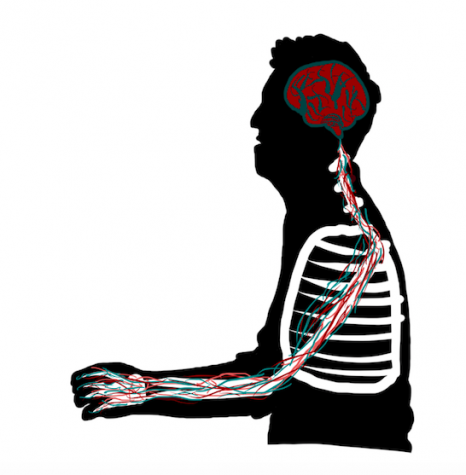
This deadliest mass shooting in American history occurred this year in Las Vegas when 58 people were killed at a concert. The next deadliest mass shooting happened on June 12, 2016, in Orlando, when a gunman killed 49. These recent mass shootings have brought up the question of not the trigger of the gun, but more so what triggers the person.
From Jan. 1 through Nov. 5, there have been 307 mass shootings in the United States according to the nonprofit Gun Violence Archive. This averages to almost seven shootings every week. Mass shootings have become more and more common over the past years, with death numbers drastically increasing. Researchers have been trying to pinpoint reasons as to why this is happening and how it can be stopped, if there is even a way.
The government has never defined “mass shooting” as a standalone category. However the Congressional Research Service has a commonly recognized definition. This definition states that a mass shooting is a shooting in which a gunman kills four or more people, selects victims randomly (ruling out gang killings or the killing of multiple family members) and attacks in a public place. With this definition, many situations in which large numbers of people have been murdered are ruled out of the category of being a “mass shooting.” For example, a man shot and killed eight people in Plano, Texas in September, but that attack wasn’t considered a mass shooting because police reported that the gunman had a “connection to the house.”
The American Psychological Association (APA) states that people who commit mass shootings in America tend to share three traits. The APA describes these characteristics as rampant depression, social isolation and pathological narcissism, according to a paper presented at the APA’s annual convention that calls on the media to deny such shooters the fame they seek. However, every mass murderer is triggered by something different and personal. Research by psychologist David Buss from 2005 indicates that about 90 percent of men and a majority of women have had at least one vivid murder fantasy, although the degree at which each individual seriously considers acting on murderous impulses varies greatly. Although mass shootings take the fewest lives of any of the types of homicides documented in the United States in the past few years, they still spark fear in many people due to their randomness and society’s inability to prevent these tragic events.
Psychologists, media communications specialists, criminologists and more have arrived upon similar conclusions. Many of them believe that a key motivator of the majority of mass shooters is the fame and power they receive for their crimes and the hope to receive as much or even more media attention as the mass shooters that came before them. The media contagion effect indicates that all coverage of mass shooters to the public has an effect on potential shooters. The belief is that this will lead potential shooters to feel rewarded with fame for the crime they commit.
The copycat effect is a subcategory of this, with the definition in its name. This means that a would-be killer feels a want to copy a specific mass murderer and his/her methods that they’ve seen. A copycat crime is a crime provoked by something that the person committing the crime has seen in the past, either in media, their lives or fiction. Copycat killings are an example of those crimes gaining prevalence.
The term “copycat” was initially used to describe patterns of criminal behavior by David Dressler, a former executive director of the New York State Division of Parole and sociologist, in 1961. His story appeared in the New York Times. The article’s subtitle, “When crime comes in waves, simple imitation plays a large part in the phenomenon,” explains Dressler’s argument. He argues that when many similar crimes occur in the same period of time, it is likely that the crimes are related.
An example of a current copycat crime occurred in December of 2015. All around New York City, there were reports of dozens of slashings in the same month. The media then speculated these crimes were being committed by different people, and referred to them as copycats.
“The issue with any of these splurges in crime is that you have to differentiate between an increase in reporting and an increase in crime,” Raymond Surette, a criminologist at the University of Central Florida, told the JSTOR Daily News.
It can become a problem when some people see the same crime repeatedly talked about on different sources of media, according to JSTOR. Some people can get the idea that they could gain publicity and become famous for committing that same crime themselves. This can become a trigger.
Jennifer B. Johnston and Andrew Joy, both from Western New Mexico University, made a set of data referring to mass shootings using FBI information, media outlets and scholarly articles. This data concluded that the idea of media contagion is highly responsible for the drastic increase in these deadly outbursts.
The First Amendment and the public’s right to know play a role in the amount of information the media is allowed to share on such topics as mass shootings. That said, the amount of information given out can create a positive or negative impact. For example, a positive impact would be the public being aware of what is happening around the world for safety purposes. However, a negative impact would be the provocation of copycat killings.
“In a case like breaking news, the initial responsibility of a reporter is to report the most accurate, timely information that’s available and to report it passionately,” said Jeremy Lipschultz, communications professor at University of Nebraska at Omaha. “To get it right should be more important than to get it first.”
Jeremy Lipschultz said that media is only one variable among many possibilities when it comes to triggering a mass killer. He said he believes that media can’t be constrained. Because of the hundreds and millions of people in the world, there’s no way to control that other than having no media at all.
“Everyone is affected by something,” Lipschultz said.
Graphic by Malia Battafarano
Locks, Lights, Out of Sight
Malia Battafarano, Lance Managing Editor
On April 20, 1999, two teenagers came into Columbine High School in Littleton, Colorado, and shot more than 30 people, killing 12 students and a teacher as well as themselves. As of Feb. 12, 2016, there had been 270 school shootings since Columbine, according to ABC News. District Director of Student Services Alan Bone is in charge of setting up the procedure for lockdown drills and is among many for whom Columbine marks the beginning of this series of school shootings, a previously foreign concept.
“I started teaching 31 years ago and [school shootings] were not even on our radar,” Bone, previously a teacher at the high school, said. “I started in 1987, so about mid-way through my career … Columbine occurred. And suddenly I think every teacher in the country thought, ‘Man, what would happen, what would I do, if that happened here?’ Not just teachers thought that. Principals thought that, superintendents thought that, parents started thinking about that, and they expected schools to have a plan and we expected ourselves to have a plan.”
Across the nation, districts began brainstorming such a plan. According to Bone, in Nebraska, Sarpy County piloted most of this innovation, attempting to overcome recurring issues combating such crises.
“[Whenever first responders were needed] what they found was they had trouble communicating because everyone had kind of their own vocabulary: schools kind of have their vocabulary; police have their vocabulary; firefighters have their vocabulary,” Bone said. “What they found was that was really slowing down their ability to respond quickly and effectively. In conjunction with a foundation called the “I Love U Guys” Foundation, they got together and put together what’s called the Standard Response Protocol.”
With Standard Response Protocol (SRP) in place, a teacher simply has to go over the intercom to tell individuals that a lockdown drill is taking place and students and teachers know to follow the district procedure: locking the doors, turning off the lights and getting out of sight. These precautions have so far been effective in schools in minimizing harm done by intruders.
“One of the good things about lockdowns is that, so far anyway, no one behind a locked door in a classroom has been harmed by any of these shooters,” Bone said.
Though the protocol and drills in place overall increase safety, they can also heighten anxiety.
“I’m old enough to remember that, no, we didn’t have shooter drills, we had duck and cover drills in case there was a nuclear attack from the Russians,” Bone said. “I think in a lot of ways that seems a lot more distant threat than what we’re doing now. The nuclear threat was more theoretical. I think, for students that are prone to anxiety anyway, I think the whole notion is probably troubling to them. Some probably feel more anxiety doing the drills, others may find comfort knowing there’s a plan and being able to go through the steps of how other people would respond if there were a threat.”
As a teacher, drills can be stressful as they require you to take responsibility for your students’ lives. According to Loveland second grade teacher Natalie Rinn, however, it has just become a part of the job.
“I think as teachers, we constantly have our students’ best interest at heart,” Rinn said. “So, when you’re a teacher you look at it academically, you want the kids to do well emotionally, you want them to do well [in] friendship choices and so [lockdown drills are] just another aspect of us taking that role and trying to keep our kids safe.”
Students have also been forced to come to terms with the reality behind the drills. Kelly Collins is a Special Education instructor at Sunset Elementary and mother of five Westside students: sophomore Eva Collins, eighth grader Peter Collins, fifth grader Violet Collins, and second graders Laura and John Collins. Kelly said she believes, as a parent, it’s important to talk to your kids about the procedure.
“I think [the conversation] depends on the kid,” Kelly said. “Some kids don’t need a lot of pre-teaching or discussion about it and some kids do need to know that and need to know that they’re going to be safe and the reason that we’re doing this is to increase safety.”
Kelly has seen each of these personality types in Violet and Laura, who both attend Loveland Elementary. Violet isn’t typically very affected by the drills.
“[The drill is] not very scary, but it’s tempting to talk because it’s super quiet,” Violet said.
According to Kelly, most of her students are similarly conditioned. She said Laura, however, is often intimidated by the drills. Though Violet generally feels much less anxiety about the drills, some aspects still perturb both girls.
“Does it bother you when they knock on the door?” Kelly asked.
“Yeah, it scares me,” Violet said.
“They shake the handle,” Laura added.
Kelly said she thinks it’s important for parents to be aware of the way the school conducts and addresses the procedures. In the past, she has not always been satisfied with their strategies.
“There was a time when [the school] showed a video to students … and as a parent, I thought that that was not an appropriate [tactic],” Kelly said. “For some kids, it might not be a big deal, for some kids, it’s a really big deal when you put a visual with it. So understanding how the school is going to talk to kids is super important.”
Lockdown drills have come to be treated like any other emergency procedure. Most teachers address the protocol with their students as it fits in with their particular classroom and situation at the beginning of each semester. Eva said in middle school, one of her teachers went as far as to add on to the typical directions.
“One of our teachers, Mom, she told us that one of us was assigned to take the room spray and spray it in the intruder’s eyes and she would kick him,” Eva said, laughing. “It was like the first day of seventh grade and she went over how to fight them.”
Though typically not as extreme, this kind of precautionary planning has become routine in classrooms across the nation. In the 18 years since Columbine, Kelly said she is glad lockdown drill protocol has been put into place but she worries that people might be becoming a little desensitized to the danger.
“I think that just because we practice these [drills] so often, I think that kids just understand that’s part of their daily life,” Kelly said. “I think it’s a bigger issue in our communities that we have to have these kind of procedures in place. But I taught before we had them, and I do think it’s really critical that we know what to do when there’s an emergency and really the only way to know what to do is to do it and to practice. In the end, it really helps to decrease anxiety about situations even though it may increase it in that moment.”